
Aug 2, 2026Furniture Insights
How to Choose Bathroom Storage Cabinets for European Homes
A B2B guide to selecting space-efficient bathroom storage cabinets, materials, suppliers and design trends for European furniture markets.
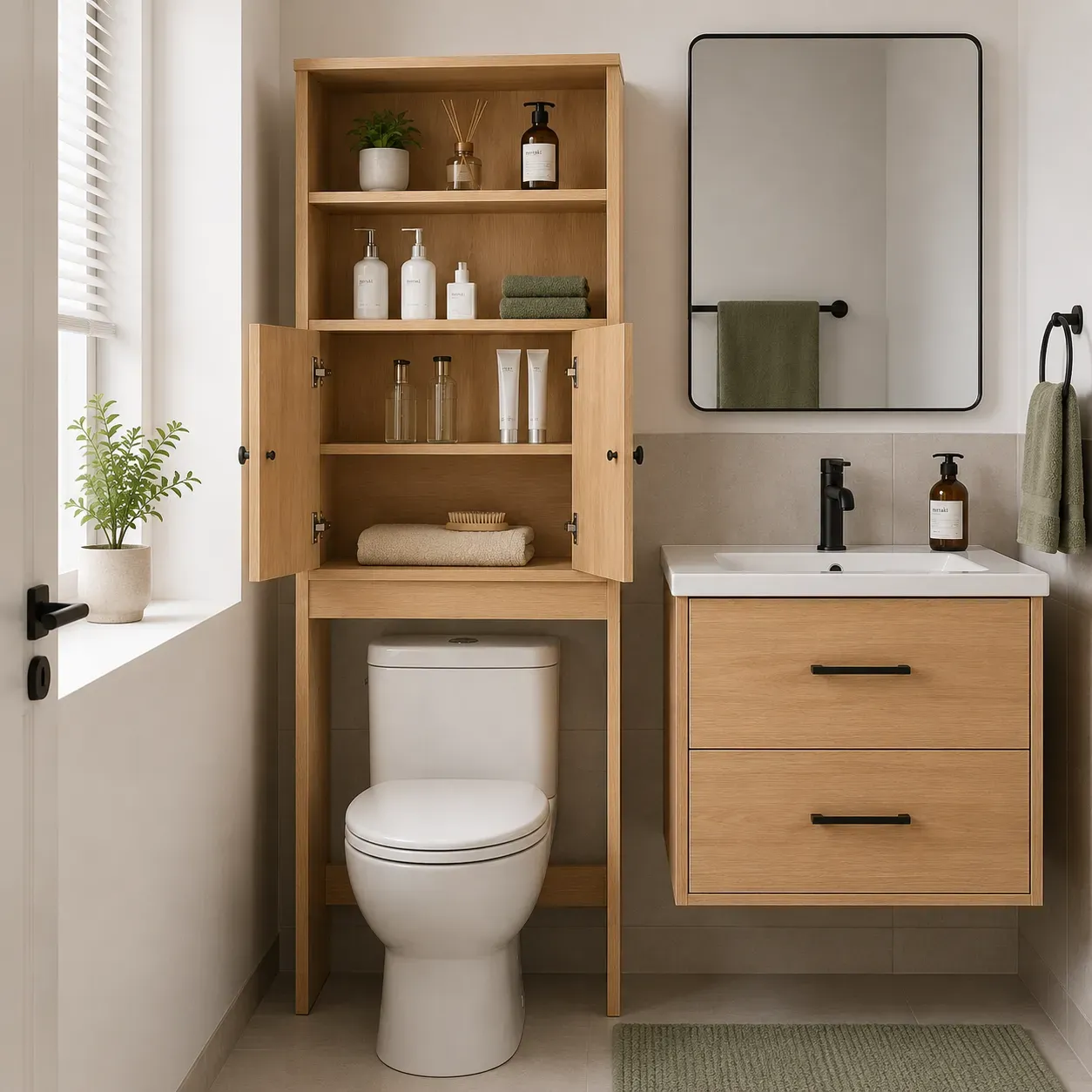
European homes often require more bathroom storage within compact footprints. For importers, retailers and private-label brands, the right cabinet range must balance useful capacity with space-efficient dimensions.
When sourcing bathroom storage cabinets, buyers should consider room size, storage function, surface finish, installation method, packaging and volume supply requirements.
1. Start with the Available Bathroom Space
Measure the available space before choosing a cabinet. Check the complete width, height and depth rather than relying only on the product category.
Pay attention to:
- Overall width
- Overall height
- Cabinet depth
- Door clearance
- Wall-fixing position
- Plumbing or appliance clearance
For compact bathrooms, slim, tall, wall-mounted and over-toilet cabinets often make better use of limited space.
2. Compare the Main Cabinet Types
Tall Bathroom Cabinets
Tall cabinets provide vertical storage without requiring a large floor area. They are suitable for towels, toiletries and cleaning products.
Buyers should confirm door clearance, anti-tip hardware and wall-fixing requirements.
Wall-Mounted Bathroom Cabinets
Wall-mounted cabinets keep the floor open and create a lighter appearance. They work well in modern apartments and compact bathrooms.
Wall structure, mounting hardware and installation instructions should be confirmed during product development.
Over-Toilet Storage Cabinets
Over-toilet cabinets use space that would otherwise remain empty. They can combine open shelves with concealed storage.
Check toilet height, cistern access and installation clearance before confirming dimensions.
Slim Bathroom Cabinets
Slim cabinets fit narrow gaps beside a basin, toilet or washing machine. They provide accessible storage in spaces where standard cabinets may be too wide.
Freestanding slim cabinets should include a suitable anti-tip solution.
3. Select Suitable Materials and Finishes
Bathroom furniture commonly uses MDF, particle board or MFC structures. Buyers should evaluate the complete specification rather than focusing on one material alone.
Important details include:
- Panel specification
- Painted or melamine surface
- Edge sealing
- Hinges and drawer runners
- Anti-tip hardware
- Wall-mounting fittings
Use accurate descriptions such as “moisture-resistant” or “suitable for normal bathroom use.” Avoid unsupported claims that a complete cabinet is fully waterproof.
Painted MDF Finishes
Painted MDF offers a smooth surface and flexible colour development. It is suitable for fluted, grooved and shaped panel details.
This finish can help private-label buyers coordinate colours across bathroom storage cabinets, vanity units and laundry furniture.
Melamine and MFC Options
Melamine and MFC provide practical woodgrain or solid-colour surfaces. They can suit volume-oriented furniture programmes when the panel and edge specifications match the intended use.
Hardware and Edge Protection
Hardware affects installation, daily operation and repeat-order consistency. Buyers should confirm hinges, runners, edge sealing and mounting fittings during sampling.
4. Match Storage Features to the End User
More shelves do not automatically create a better cabinet. The internal layout should match a clear end-use scenario.
Useful features include:
- Adjustable shelves for towels and tall products
- Drawers for small everyday items
- Open shelves for frequently used products
- Closed storage to reduce visual clutter
- Appliance clearance where required
- Toilet-paper access for over-toilet cabinets
- Plumbing or cable cut-outs where relevant
A balanced combination of open and closed storage is often easier for European retailers to merchandise.
5. Consider Flat-Pack Packaging and Assembly
Flat-pack packaging is available for suitable cabinet structures. The final packaging method should be confirmed according to the product and order requirements.
B2B buyers should review:
- Flat-pack structure
- Carton dimensions
- Assembly instructions
- Hardware labelling
- Packaging test requirements
- Replacement-part management
- Loading efficiency
Packaging requirements should be discussed during product development rather than after final product approval.
6. Plan OEM and Private-Label Requirements
A clear project brief helps the supplier evaluate feasibility, sampling and quotation requirements.
Include the following information in your enquiry:
- Target dimensions
- Preferred colour
- Finish type
- Cabinet structure
- Expected order quantity
- Packaging requirements
- Target market
- Required compliance documents
Reference images, drawings and retail positioning can also help clarify the intended product direction.
7. Recommended Bathroom Storage Solutions
Floating Tall Bathroom Cabinet
A vertical solution for compact bathrooms that require shelves, drawers and concealed storage.
Slim Floating Bathroom Storage Column
A narrow wall-mounted cabinet that keeps the floor visually open while providing concealed storage.
Fluted Over-Toilet Storage Cabinet
A space-saving cabinet that combines an open shelf with hidden storage above the toilet.
8. Frequently Asked Questions
What information should buyers provide for an OEM quotation?
Provide the target dimensions, material, colour, finish, cabinet structure, expected quantity, packaging requirements and destination market. Buyers should also identify any compliance documents required for the project.
Can bathroom cabinets be customised in colour and finish?
Painted finishes, colour development and melamine options can be discussed for suitable projects. The final solution depends on cabinet structure, order quantity and sample confirmation.
Are JUMA bathroom cabinets supplied flat-packed?
Flat-pack packaging is available for suitable cabinet structures. The final packing method depends on the product design, hardware, surface protection and order requirements.
What moisture-related details should importers check?
Review the panel specification, painted or melamine surface, edge sealing, hardware and intended bathroom environment. Performance depends on the complete construction and correct installation.
Can packaging be developed for private-label programmes?
Carton artwork, labels, assembly instructions, hardware packs and product colours can be discussed. Available options must be confirmed according to the product and order requirements.
9. Develop Your Next Bathroom Storage Collection
Share your target dimensions, preferred finish, storage requirements and market positioning with the JUMA Furniture team.